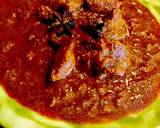
Source : Wash The Mutton Pieces Amp The Mutton Mince Thoroughly No Water Should Remain Marinate With Yogurt Nutmeg Asafoetida Salt Degi Mirch Amp Turmer...
PreTime
more Minutes
CookTime
a few Minutes
Yield
Some Servings
Sent by Anu Pathria (Anus Gourmet Dining)
at : August 15, 2026
Step:
Wash the Mutton pieces & the Mutton mince thoroughly. No water should remain.
Marinate with Yogurt, Nutmeg, Asafoetida, Salt, Degi Mirch & Turmeric Powder. Refrigerate for at least 2 hours. More the better.
Take out the marinated mutton from the refrigerator when you are ready to cook so that it comes to room temperature while you prepare the masala.
Heat oil in a large heavy bottom pot or nonstick skillet.
Tip in the Whole Spices - Cinnamon, Bay Leaf, Dry Red Chilis, Star Anise & Cloves.
Let them crackle & release their aroma.
Saut the Onion on high heat until golden. Reduce heat to medium.
Add the Ginger & Garlic Paste. Cook for 2 minutes.
Add Ratan Jot, Dagad Phool & the freshly Roasted & Pounded spice mix. Cook for a minute.
Add the Tomatoes and fry on medium to high heat until oil separates. Keep covered to avoid splatters. Stir frequently.
Add the Mutton along with the marinade. Mix well. Cook (bhuno) on high heat for about 10-15 minutes.
Add 2 cups of water or as required. Cover with a lid once it comes to a boil.
Cook covered over low heat until the Mutton is tender & start falling off the bones, stirring occasionally.
Note: You may use a Pressure Cooker or an Instant Pot if you wish to. 20 minutes on high pressure should be good with at least 2 Cups of water. I prefer slow cooking because the moist heat softens the connective tissue that binds the muscle fibers in the meat, helping it to fall apart more easily. And when the heat is kept low, as it is in slow cooking, the proteins in the muscles are less likely to overcook, so the meat stays moist as well as tender.
Transfer to a serving dish. Garnish with Coriander leaves.
Enjoy with Naan/Tandoori Roti/Tawa Roti/Steamed Rice/Jeera Pulao.
Information/Description:
1. Alkanet root:
Alkanna tinctoria, the dyer's alkanet or alkanet, is a herb in the borage family. It's main notability is it's roots are used as a red dye. The plant is also known as dyers' bugloss, orchanet, Spanish bugloss, or Languedoc bugloss. It is native to the Mediterranean region.
Alkanet root, better known as Ratan Jot, is traditionally used to add colour to Indian food. It is the original natural food colouring that gives the famous Kashmiri dish Rogan Josh it's signature red colour.
Kashmiri Pandits use a dried herb called Ratan Jot to add a pleasing red colour to their dishes. This spice was originally used in many much-loved Indian dishes such as Rogan Josh and Tandoori Chicken. It is an herb that one rarely comes across now, after the advent of synthetic food colours. Along with Kashmiri chilies which are red and appear flaming hot in appearance but lack pungency, Ratan Jot provides many Kashmiri and Punjabi dishes their dashing good looks!
~ Wikipedia
2. Stone Flower:
Parmotrema perlatum, commonly known as black stone flower or kalpasi, is a species of lichen used as spice in India. The species occurs throughout the temperate Northern and Southern Hemispheres. Typically used in meat dishes like nahari (Paaya), Bombay biryani, Goat meat stews, it is also used in vegetarian dishes. It is one of the ingredients in East Indian Bottle Masala, used for cooking Meats, fish and vegetables.
Some of the other names for it include shaileyam in Sanskrit, kalpasi in Tamil, Dagar da Phool in Punjabi, dagad phool in Marathi, Raathi Pootha (Banda Puvvu) in Telugu, "Kallu Hoovu" in Kannada and patthar ke phool in Hindi. "Bojhwar" in Northern India.
~ Wikipedia
Ingredients
750 Grams Mutton (Goat/Lamb)(Cut into cubes) I used Lamb